

On March 12, 2026, the Mehlville School District Board of Education voted to mark the closure of the SCOPE (South County Opportunity for the Purpose of Education) program for the 2026-2027 school year.
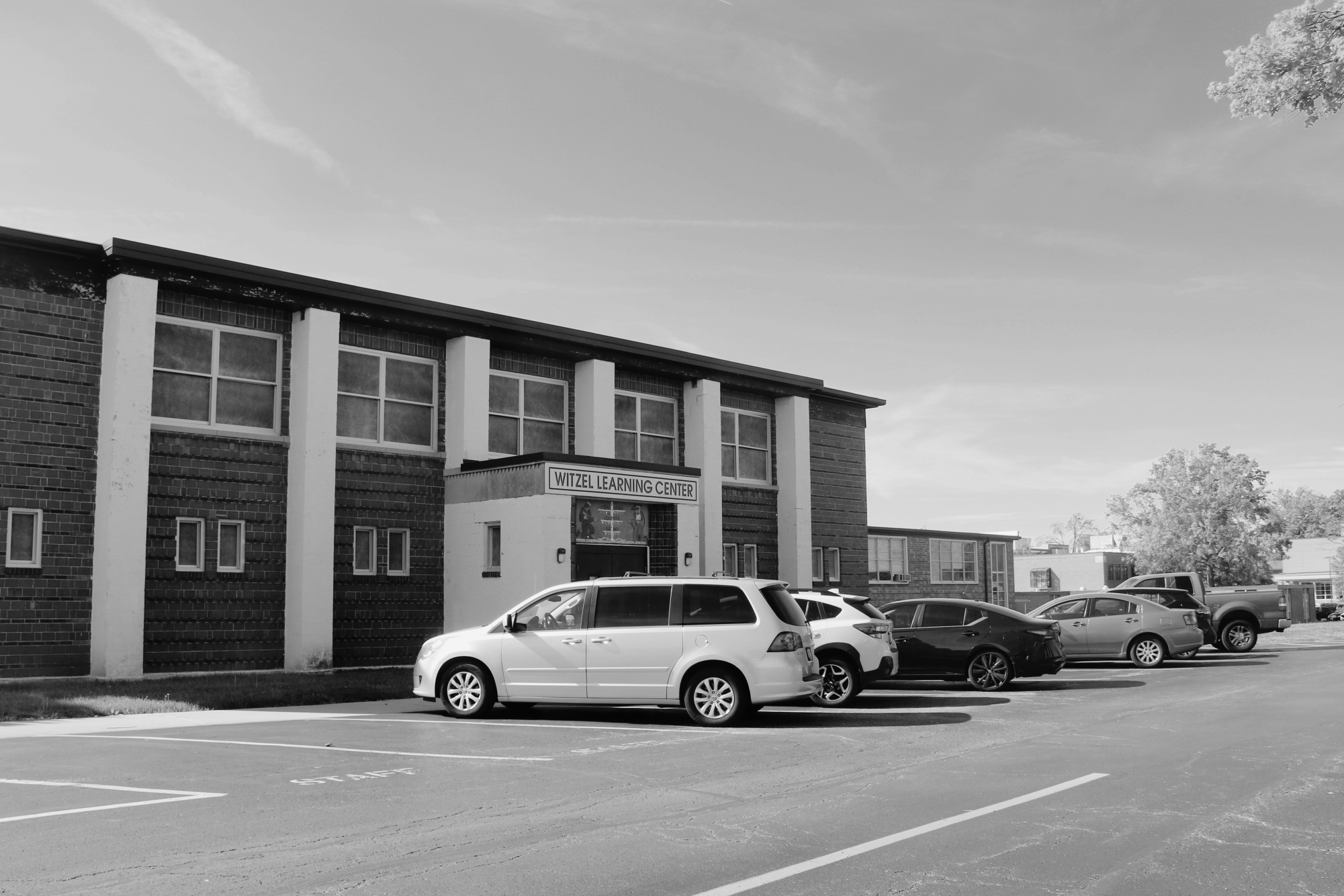
“The SCOPE program is a program that’s offered through the district. There are three or four different programs that are kind of within that SCOPE program, which is in the Witzel Building on Mehlville High School’s campus. And in that program, there is an alternative to the graduation path, which is Missouri Options,” assistant superintendent of secondary education Dr. Jason Landherr said. “There is a long-term suspension management school for students that are suspended for a longer period of time. And then with that, that’s a lot of district students, but there’s also a consortium of schools that — there’s, like, three or four schools from St. Louis County, kind of pretty close to us geographically — also utilizes the long-term suspension piece.”
The alternative learning programs are offered to students for a variety of reasons and are tailored to each individual student and their needs.
“So right now in its current form, students will go to SCOPE either because they are pursuing the Missouri Options, they’re credit deficient for a variety of reasons or they’re not performing well in their home school, and that could also be for a variety of reasons,” alternative education counselor Deana Tice said. “So a lot of times when a student is suspended, it is because of learning issues … So by going to SCOPE, they are in a much smaller environment. There are some things in place that keep that a safe place. Students are wanded when they come in so that helps eliminate the vapes and things that come in pretty freely into a typical high school. And then we also … just our teachers have been working with at-risk students for a very long time. So their approach is going to look different than your typical teacher who’s working with your typical student. So with the closing of SCOPE, students who were not performing well in high school are now going to be at home where we can almost certainly know that they will not perform well. They will not have that safety and security anymore.”
With the ending of the SCOPE program, all students placed on long-term suspensions will be placed in online school to serve their suspension. They will learn on the platform called Edgentity where a teacher monitors their progress online. Those involved with the SCOPE program feel that this will be a large change from the services students in the past have received.
“They will not have that safety and security anymore [of the SCOPE program]. They could live in an area that maybe is not safe,” Deana said. “Maybe they have people in their home that they could use some time away from by being at school. They will also get a meal, which they might not get at home. And so some of these things that were encouraging them to come to school or to at least try to interact with coursework aren’t there anymore.”
Deana has also seen students start to thrive in the SCOPE program due to the smaller classes and more individualized attention.
“Also, we had a whole lot of students who would come to SCOPE with sort of preconceived notions about school, about maybe they didn’t think it was for them. Maybe it made them feel kind of stupid. Maybe it was like haves versus haves not. And then they would go to SCOPE and they would feel less of that because of the smaller class sizes,” Deana said. “And then they would start interacting with coursework. They would be getting tutoring and then that might lead them to Missouri Options, and then they get to become a high school graduate. Well, that won’t be there for those kids anymore.”
There is worry among Deana and Personalized Learning Lab teacher Chris Tice that students placed on long-term suspensions online will not thrive since they will be missing out on the in-school, small class size that SCOPE offered. Oakville principal Brian Brennan has some concerns as well.
“I think there’s going to be some challenges. I do. I don’t think it’s a great plan for everybody,” Brennan said. “So I think there’s going to be some challenges that we will for sure face and that students will have to deal with. So again, we’ll have to deal with those as we go through this and figure out more.”
In addition to acknowledging the potential shortcomings that may come to the SCOPE changes, there are other details that staff members are concerned about and are still waiting on answers about.
“So long-term suspensions do go to SCOPE, and that is a major concern because now all of them are going to be going virtual. We know that virtual is great for some kids, but not for all. With them going completely virtual, they won’t have access to SCOPE. A lot of those long-term suspensions actually choose to go into the building to get help from teachers and they get a meal there. Some of these kids are going to go hungry because of economic reasons, unfortunately. They are not going to graduate. We’re going to leave some kids behind. So that’s very unfortunate,” Chris said. “With MO Options, our building is crowded. We have traveling teachers. Now we’re going to have kids in the building, maybe 20-something years old. They’re going to be mingling with 14-15 year old freshmen because there’s no way to separate everyone. We’re going to do our best, but it’s not going to always happen. I just don’t think that’s a good combination.”
As of now, it is relatively unclear where MO Options will be housed in Oakville High School, but the district plans to have everything in place by the start of the 2027 school year. According to Landherr, the goal of MO Options being moved into the high schools is for students to keep relationships with staff at their home high school instead of being moved into a different building and having to become familiar with all new staff. Another goal of MO Options being housed in the high school is for students to still be a part of high school activities.
“So here with Missouri Options, we will be a little more flexible to offer different classes within the day, as well as students could stay connected to a choir or a band or a business class. You know, in the past, when they went to Witzel, off the Oakville High School’s campus, they could still stay in choir,” Landherr said. “There was a lot more difficulty to try to go to Witzel for part of their day, and if the block of time didn’t align with when choir or band or whatever might meet here, so it would be an option for a student to do that (with MO Options being in the home high schools) or even like an art class or something that they’re just passionate about.”
Currently, the SCOPE program offers flexibility that some students wanted or needed, but it came at a significant cost to the district.
“There’s a big financial burden that is being absorbed by the district right now because a lot of the school districts have removed their students from the program and there are less long-term suspension students that are going there, things along those lines. The program is losing close to a million dollars a year,” Brennan said. “So the district cannot financially continue along those lines to do that. We’re also in the process, we’re doing all kinds of investigation and work into some type of potential of an alternative high school, but we can’t wait for those plans to be finalized if we’re losing a million dollars a year. So it doesn’t make sense for us to continue with the program where the student population is dwindling and the costs are exorbitant. So we’ve got other ways that we can absorb and provide services to those students.”
MSD School Board members and additional SCOPE teaching staff were contacted for an interview and did not respond.