For senior Chloe Clark, school looks different this year. Instead of spending all day inside OHS’ hallways, she is at CAPS (Center for Advanced Professional Studies), a program that prepares students for the professional world by letting them learn in real business environments.
“It’s an off-site thing that you go to and you learn something more specialized to what your interests are about,” Clark said. “CAPS only has three available ones, which is business, medical … and then engineering and technology, which is the one I’m in.”
When Clark joined CAPS in the beginning of the school year, she was questioning if she wanted to stay in because of personal conflicts, but after lots of thinking and guidance, she decided it would be in her best interest to continue, especially because of the selectiveness of the program.
“What drew me to CAPS was first getting out of Oakville,” Clark said, “and second, doing something that I know there’s a field in for the future, and it’s something I’ve been interested in for about two and a half years now. I thought it would be a good experience.”
Clark’s passion for engineering has always run deep, from first wanting to study aerospace to now shifting her focus to environmental engineering because of her interest in botany.
“I’ve always wanted to do something that I know would help people and help the environment,” Clark said. “With so many different routes and ways you can go with engineering, I just was drawn to it because … it’s interesting. You’re not doing the same thing every day. You’re working on a problem to actively fix it. What I want to do … positively impacts the environment, people, animals and diversity, biodiversity, all that.”
Although it is still the beginning of the year, Clark already knows what she’s enjoying most so far.
“About every other week, we go on site visits to a professional place and we tour the facility and we meet new people and we get to see what people do on a day-to-day basis at their job and what that entails,” Clark said. “It really puts you in the real-world environment.”
Part of the CAPS experience includes learning professional skills like networking and interviewing to help better prepare you for the business world.
“You have a lot of guest speakers that are business professionals, and you learn how to set up a resume, you do mock interviews, you set up a linked in account that you stay active on and make posts on it biweekly. I think all of that culminating is really what does it,” Clark said.
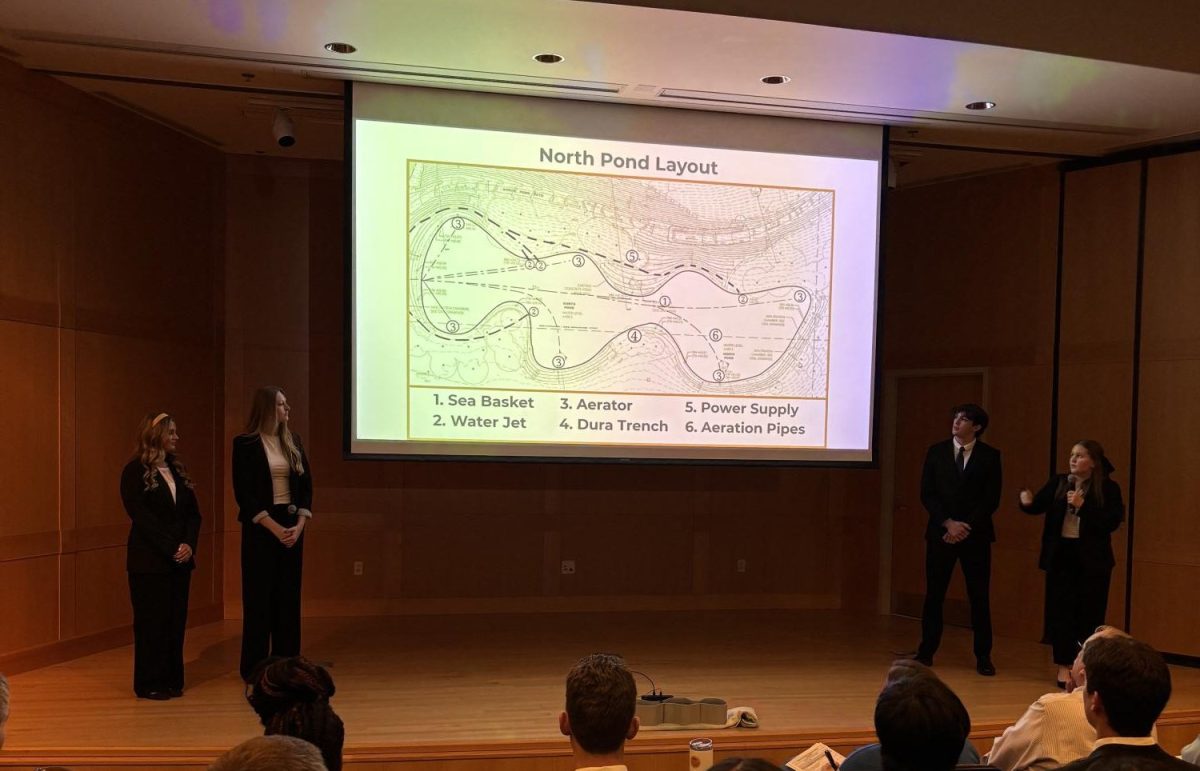
In CAPS, students are expected to act the part, whether that means dressing in business casual or learning how to carry themselves in meetings and presentations.
“You have to pretend to be professional in a professional setting,” Clark said. “As a high schooler, I can’t talk the way I talk to my friends. You sort of have to put on a facade in a way. ‘Fake it til you make it’ is probably the biggest thing I’ve learned.”
While some students see CAPS as a way to get away from the school day, Clark says that attitude will not get you far. The program requires initiative and genuine interest since every project and site visit demands effort and professionalism from the start.
“You have to talk to people. It’s a very group oriented, collaborative class, because that’s how an engineering environment usually is,” Clark said. “Working together, coming up with common solutions, making everyone feel comfortable, making sure that everyone can have an open conversation, get along with each other … I think teamwork and communication are probably my biggest takeaways right now.”
Most classes are filled with students who have many different goals — some to build their communication skills, others to figure out what career path fits them best and some to get a head start on their future career.
“I would recommend it. I think it’s a good program. I think you can learn a lot. It’s definitely going to get you out of your comfort zone within the first day,” Clark said. “I’d recommend it for serious people.”
Although Clark has not been in CAPS long, it’s already given her her biggest realization.
“High school is not like real life. What they teach you in high school is not applicable to the real world,” Clark said. “CAPS actually gets you set up for what life outside of high school is going to be like.”